


 English
 Español
How to Get a Payday Loan Without Getting Scammed: Eligibility, Documents and License Checks
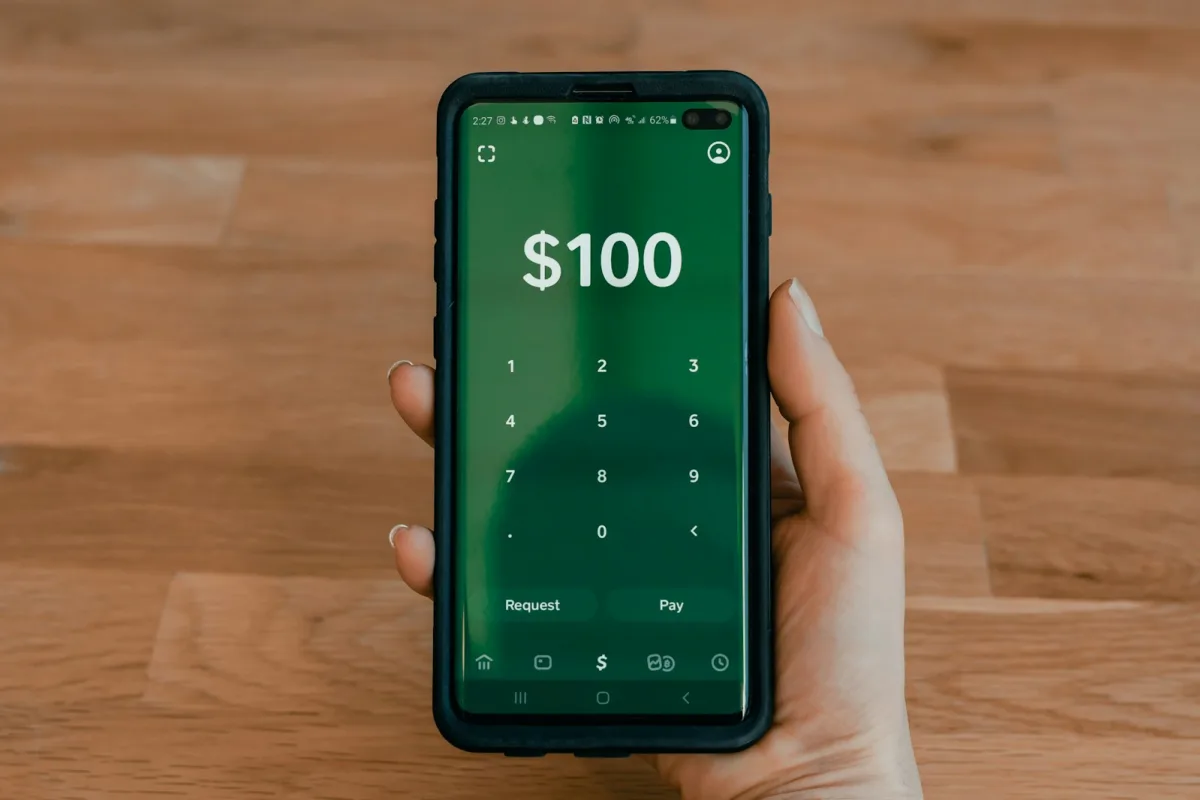
To get a payday loan you need five things: an active bank, credit union or prepaid card account; proof of income; valid ID; to be at least 18; and a state where the product is legal. Before you apply anywhere, do one thing first: confirm the lender holds a license with your state regulator. That single check is what separates a legal loan from an advance-fee scam.
The people I talk to are usually not researching. They need $400 by Friday, they are searching on a phone, and the top results are lender landing pages promising approval in minutes. This guide keeps the same order of urgency. It puts the two things most likely to hurt you (an unlicensed lender and a fee demanded up front) before the application steps, then walks through what to gather, where to apply and what the lender must show you.
You are not alone in looking, either. The Federal Reserve's household survey for 2025 found 7% of adults used a payday, pawn, title or refund anticipation loan that year, and one-third of everyone who applied for credit was denied or approved for less than requested.
Step 0: Confirm payday loans are legal in your state, and what the cap is
State law decides whether a payday loan exists at all, who may offer it and what it costs. The Center for Responsible Lending's June 2023 map counts about 20 states plus the District of Columbia with rate caps near 36%. In those states, a "payday loan" offered at $15 per $100 is coming from an out-of-state or unlicensed operator, or it is a different product wearing the name. The rest set their own limits, and they differ more than most borrowers expect.
- California: $300 maximum, a 15% fee, and no second loan from the same licensee while one is outstanding (Cal. Fin. Code 23035 and 23036).
- Washington: $700 or 30% of gross monthly income, and no more than eight loans in any 12 months from all licensees combined (RCW 31.45.073). A statewide database enforces the count.
- Florida: single-payment loans of 7 to 31 days, $500 maximum, with a real-time database check before each one (Fla. Stat. 560.404).
- Virginia: the two-week payday loan is gone, replaced by short-term loans of 4 to 24 months up to $2,500 (Va. Code 6.2-1816.1).
Open your state page before step 1. It carries the cap, the fee limit and the regulator's contact details, and it tells you in one line whether the product you are about to request is legal where you live.
Step 1: Verify the lender's license
The FTC's advice on payday loans is to "check with your state attorney general or state regulator about payday and title lending laws in your state." States that permit payday lending license their lenders, and each regulator publishes a lookup. Texas, for example, runs a licensee search through the Office of Consumer Credit Commissioner. NMLS Consumer Access is a useful starting point for state-licensed non-bank lenders, with the caveat that not every state licenses payday lenders through NMLS, so a missing entry there is a reason to check the state site, not a verdict.
For a company you have never heard of, add the checks from the FTC's advance-fee guidance. Run them in this order, because each one is cheaper than the next.
- Search the legal name in your state regulator's license lookup. A licensed lender appears under the name on its agreement; a scam usually does not appear at all.
- Confirm registration with your state attorney general or banking regulator. Some states license through a different office than the one you expect, and the attorney general's office will know which.
- Search the company name together with "review," "complaint" or "scam." Advance-fee operations reuse names and phone numbers, so earlier victims often leave a trail.
- Report anything that smells wrong at ReportFraud.ftc.gov. Your report helps the FTC connect a pattern, and it costs you five minutes.
A client of mine once paid a "loan insurance" fee to a caller who had her name, her employer and a convincing website. The loan never came, and the "lender" held no license anywhere. Ten minutes on the regulator's site would have ended the call. Do this step before you type your Social Security number into anything.
Step 2: Gather your documents
The CFPB's eligibility answer (reviewed August 26, 2024) lists what payday lenders generally require: "an active bank, credit union, or prepaid card account," "proof or verification of income from a job or other source," "valid identification," and an applicant who is "at least 18 years old." Here is what each one looks like in your hands.
| Document | What counts | Why the lender wants it |
|---|---|---|
| Valid identification | Driver's license, state ID card or passport; the name must match your bank account. | Identity and age verification. |
| Proof of income | Recent pay stubs. For gig work, bank statements or platform payout history. For benefits, an award letter or statements showing the deposits. | The CFPB's wording is income "from a job or other source"; the lender is sizing the loan to your next deposit. |
| Bank account details | Account and routing number, or a voided check at a storefront. | Repayment by post-dated check or electronic debit. |
| Contact information | Phone, email and a home address that match your ID. | Mismatches trigger automated denials. |
| Social Security number | Requested by most lenders for identity verification. | Give it only on the licensed lender's secure form, never by email or text. |
Step 3: Choose online or storefront
| Factor | Storefront | Online |
|---|---|---|
| Speed | Cash at the counter once approved. | ACH deposit; timing depends on the lender's cut-off and your bank. |
| Repayment method | Post-dated check or debit authorization. | Electronic debit authorization. |
| Bank exposure | One check, one date. | The CFPB's 2016 study found half of online borrower accounts had at least one failed or overdrawing payment request, averaging $185 in bank fees. |
| Privacy | Face to face in your neighborhood. | Your bank data travels through a third party. |
| Ability to walk away | You can read the agreement and leave it on the counter. | Close the tab before the final signature; a request is not a loan. |
Submitting the request form on this site is neither. This is a loan-request service, not a lender. A request is not an application with a specific lender and does not guarantee an offer; lenders in the network perform their own verification and apply their own criteria under your state's law.
Step 4: Read the TILA box before you sign
Federal law gives you the two numbers that matter before you commit. The FTC's summary: lenders must give you "the finance charge, which is a dollar amount, and the APR, which is a percentage." A lender that will not show both in writing before signing is a stop sign, whatever the reason offered.
Run the arithmetic on the FTC's own example. Borrow $500 for two weeks at $15 per $100: the finance charge is 5 x $15 = $75. Convert that to an annual rate: 75 / 500 x 365 / 14 = 3.91, or 391% APR. State maximums run $10 to $30 per $100 (CFPB), so at $30 the same loan costs $150 and the APR doubles to 782%. Then find the due date and the paragraph on what happens if the payment fails: late fees, returned-check fees and whether the lender can present the debit again.
Step 5: After funding, know your federal rights
Repayment comes out on the due date by the method you authorized. If the debit fails, the CFPB's payment provisions (in effect since March 30, 2025) say a lender may not attempt a third withdrawal after two consecutive failures without new authorization from you, and must send advance notice of withdrawals. Two caveats: the CFPB stated in March 2025 that it will not prioritize enforcement penalties, and its 2026 agenda includes a proposal to reconsider the provisions. The rule is leverage in a conversation with a lender; it is not a guarantee.
You can revoke a debit authorization by telling the lender in writing and telling your bank. Revoking the authorization stops the withdrawal; it does not cancel the debt, and the lender can still collect through lawful channels. If a lender presents a payment again after you have revoked or after two failures, keep the bank statement and file a complaint with the CFPB and your state regulator.
Service members and their dependents have a separate ceiling: a 36% military annual percentage rate cap under 32 CFR 232.4. Many payday lenders decline covered borrowers rather than price under it.
Red flags, and the check that exposes each one
| Red flag | The check |
|---|---|
| A fee, "insurance," "processing" or "paperwork" charge before the loan is funded | Licensed lenders take fees from the loan or add them to repayment. Any request for money up front, especially by gift card or wire, is the FTC's marker for an advance-fee scam. |
| "Guaranteed approval" or "Bad credit? No problem" before any application | No lender can guarantee approval before verifying income and identity; the FTC lists the phrase as a warning sign. |
| An unsolicited call or text offering a loan | Licensed lenders respond to requests. Hang up, then search the name with "scam." |
| "Up to $X" and "instant" | The FTC's November 5, 2024 case against a cash advance app alleged "up to $500" was rarely delivered and a $3 to $25 express fee was hidden until after bank access was granted; its March 27, 2025 order against another app ($17 million) involved "up to $250" advertised, far less delivered, a $3.99 express fee and a hard-to-cancel subscription. Ask for the actual amount and the actual fee in writing. |
| No license in the state lookup | Search the legal name on the agreement, not the trade name on the website. |
| No finance charge or APR in writing | Ask for the disclosure before signing. Silence is the answer. |
| Pressure to sign in the next ten minutes | A legal offer will still be legal tomorrow. Leave. |
Alternatives worth one phone call
The FTC's own list before a payday loan: ask the creditor you owe for more time, ask a credit union about a payday alternative loan, try a community bank, and talk to a nonprofit credit counselor. Local assistance programs for utilities and rent exist in most counties. None of these is faster than a storefront. Several are cheaper by a wide margin.
Whatever you decide, refuse these:
- Any payment before funding, in any form.
- An agreement with no printed finance charge and APR.
- A loan from a name that is not in your state's license lookup.
- A third debit attempt authorized over the phone under pressure.
- A collector's mention of arrest or jail; note the time and report it.
Sources
State caps, maximum terms and the regulator for your state are cited on the state pages.
Frequently Asked Questions
Can I get a payday loan with no credit check?
Many payday lenders do not run a hard inquiry with the nationwide bureaus, but most verify identity, income and your bank account, and some check a specialty small-dollar credit file. "No credit check" is not the same as "no check." Lenders in this site's network set their own verification and may review credit information.
Can I get a payday loan the same day?
At a storefront, cash is handed over at the counter once you are approved. Online, funding arrives by ACH and depends on the lender's cut-off time and your bank's posting schedule. No one can promise a time, and a lender that guarantees "instant" money is showing you a red flag from the table above.
Can I get a payday loan on benefits income?
The CFPB's requirement is "proof or verification of income from a job or other source," and it names pensions and Social Security as examples of other sources. Bring the award letter or bank statements showing the deposits. Lenders decide individually whether to accept a given income type.
Can I cancel a payday loan after signing?
Whether you can rescind depends on your state's law; your state page says if a cancellation window exists and how long it runs. What you can do in any state is revoke the debit authorization in writing with the lender and your bank. That stops the withdrawal but not the debt, so plan to repay the principal and the disclosed fee.
What happens if I move to another state?
Your existing loan stays governed by the law of the state where it was made and the license the lender holds there. A new loan in your new state follows that state's rules, including its cap and any database limits, and a lender licensed in your old state is not automatically licensed in the new one. Check the new state's page and its license lookup before requesting anything.
Not a lender. Cost figures use the federal APR formula and the state rule named next to them; the state pages cite each statute. Full disclosures.